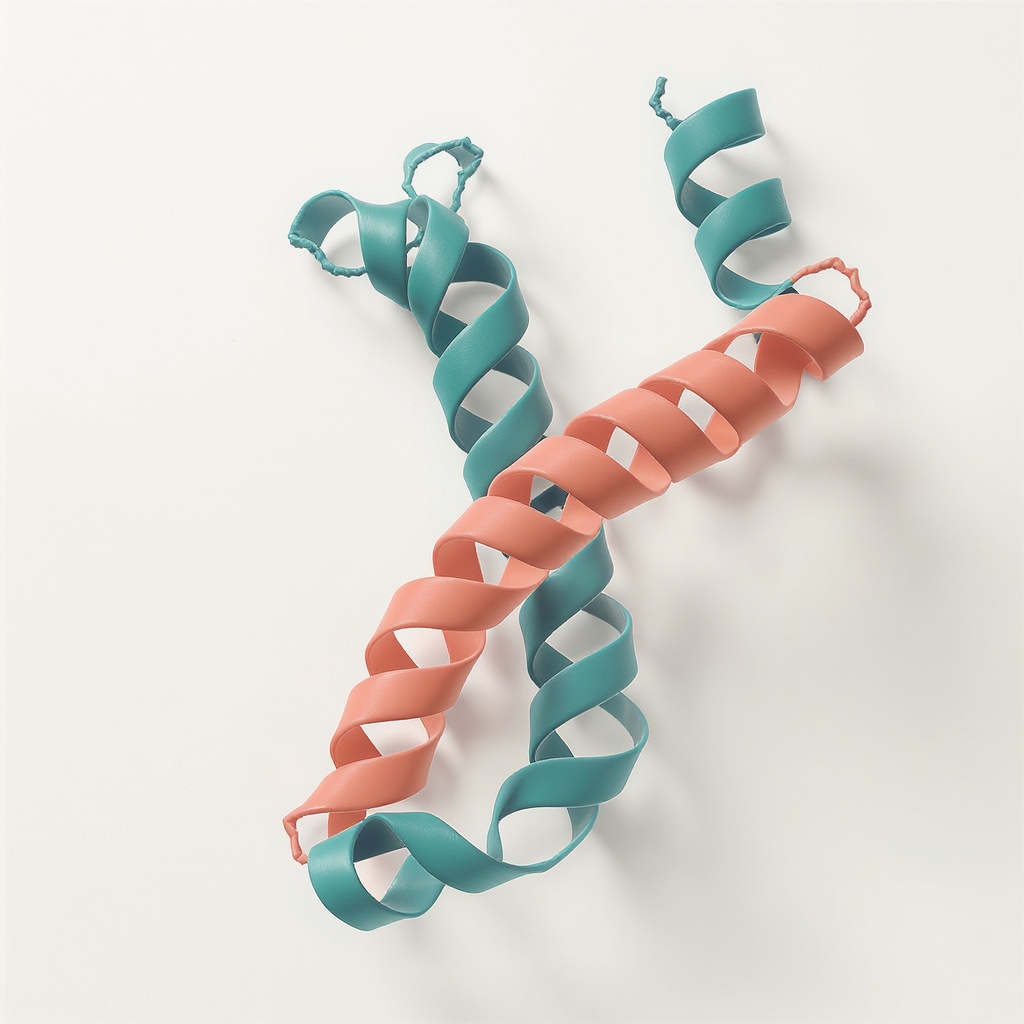
In the spring of 1991, a team of Croatian researchers published a paper in the journal European Journal of Pharmacology describing a peculiar fragment of a human growth hormone. They had isolated a 15-amino-acid chain — a peptide — and observed something unexpected: when administered to rats with perforated stomachs and transected quadriceps muscles, wounds closed faster. Angiogenesis increased. Tendons regrew. The paper was meticulous and largely ignored.
That peptide, now known as BPC-157, has spent three decades in scientific purgatory — banned by regulators, embraced by athletes, studied in small trials abroad, and almost completely overlooked by American pharma. Today it is the subject of more Reddit posts than PubMed-indexed studies, a compound that has achieved a rare status in modern medicine: genuine enthusiasm among patients, widespread skepticism among physicians, and a quiet but growing body of mechanistic research that deserves a more careful look.
What BPC-157 Actually Is
BPC stands for "Body Protection Compound." The number 157 refers to its position in the sequence of human growth hormone. The compound is a synthetic fragment — it does not occur in nature. Its proponents claim it promotes healing through a cascade of mechanisms: upregulating growth hormone receptors, promoting angiogenesis (new blood vessel formation), modulating nitric oxide pathways, and stabilizing the gastrointestinal lining.
Researchers at the University of Zagreb, where much of the early work was conducted, describe BPC-157 as a "stable gastric pentadecapeptide" — a description that is both accurate and unhelpful to anyone outside a biochemistry lab. In plain terms: it's a short chain of amino acids, structurally stable enough to survive the digestive tract, capable of interacting with multiple biological pathways simultaneously.
The Evidence, Such As It Is
The scientific record on BPC-157 is unusual in structure. There is a dense body of animal research — mouse and rat studies spanning wound healing, tendon repair, bone healing, and neuroprotection. These studies are reproducible and consistent. The effect sizes are striking. A 2019 paper in Frontiers in Pharmacology described BPC-157 accelerating the healing of Achilles tendon transection in rats by nearly 50% compared to controls.
What is conspicuously absent is Phase II human trials. No large-scale clinical trials. No FDA approval. No pharmaceutical company has brought BPC-157 through the regulatory process. This is not unusual for a compound that cannot be patented — which is the case for any short amino acid sequence that occurs naturally in the body. Without patent protection, there is no financial incentive to fund the tens of millions of dollars required for FDA approval. The compound exists in a regulatory gray zone: not a drug, not a supplement, not a food — a research chemical of sorts, produced by compounding pharmacies and sold in a gray market.
Why Athletes Are Talking About It
The anecdotal literature is extensive. A 2024 survey of online peptide forums — a methodology that would make any epidemiologist wince — found that BPC-157 was among the most frequently discussed compounds for musculoskeletal injuries. Bodybuilders recovering from distal biceps tears. Weekend warriors returning from ACL reconstruction. Rugby players with chronic Achilles tendinopathy. The reports are uniformly enthusiastic.
"It was the only thing that got my golfer's elbow to resolve before surgery was my only option." — Forum user, r/Peptides, 2024
The problem with this evidence is not that it's fabricated — it's likely not — but that it is uncontrolled, unblinded, and subject to the well-documented psychological phenomenon of treatment effect in musculoskeletal medicine. Healing is nonlinear. Time passes. Rest helps. Tendons heal. It is nearly impossible, in a single case, to distinguish drug effect from natural history.
The Safety Question
Here the picture is more reassuring than expected. The acute toxicity profile of BPC-157 appears remarkably clean. Doses up to 10μg/kg in rats produced no observable adverse effects. No significant drug-drug interactions have been documented. The compound does not appear to be carcinogenic or teratogenic. This is not the same as "safe in humans" — the dose-response relationship has not been established, and chronic use has not been studied — but it is not nothing.
The More Interesting Question
The real story with BPC-157 is not whether it works — the animal data is consistent enough that it almost certainly does something — but why the mechanism is so poorly understood, and what the existence of such a compound tells us about the limits of our current approach to musculoskeletal medicine.
We have excellent surgical interventions and excellent rehabilitation protocols. We have NSAIDs and corticosteroids. What we do not have is a reliable pharmacologic tool for accelerating tissue healing. Physical therapy works — but it works slowly, and compliance is a real problem. Surgical repair works — but it is invasive, expensive, and requires weeks of immobilization. If a peptide could meaningfully accelerate tendon healing without surgery, the clinical need is obvious.
BPC-157 may or may not be that peptide. But its existence — and the intensity of interest it has generated — is a signal that the market for this need is large and largely unmet. The researchers in Zagreb did not set out to create the next great biohacking compound. They were trying to understand how the stomach heals. The fact that what they found might also heal Achilles tendons is either a remarkable coincidence or a hint about the deep generality of the mechanism.
We'll know more when the first serious human trials report. Until then, BPC-157 remains a compound that looks extraordinarily promising in animals, is almost certainly being used by a meaningful fraction of serious athletes, and is almost entirely unknown to the physicians who treat the injuries it might help.